
By E-commerce 4 Internet Marketers Editorial
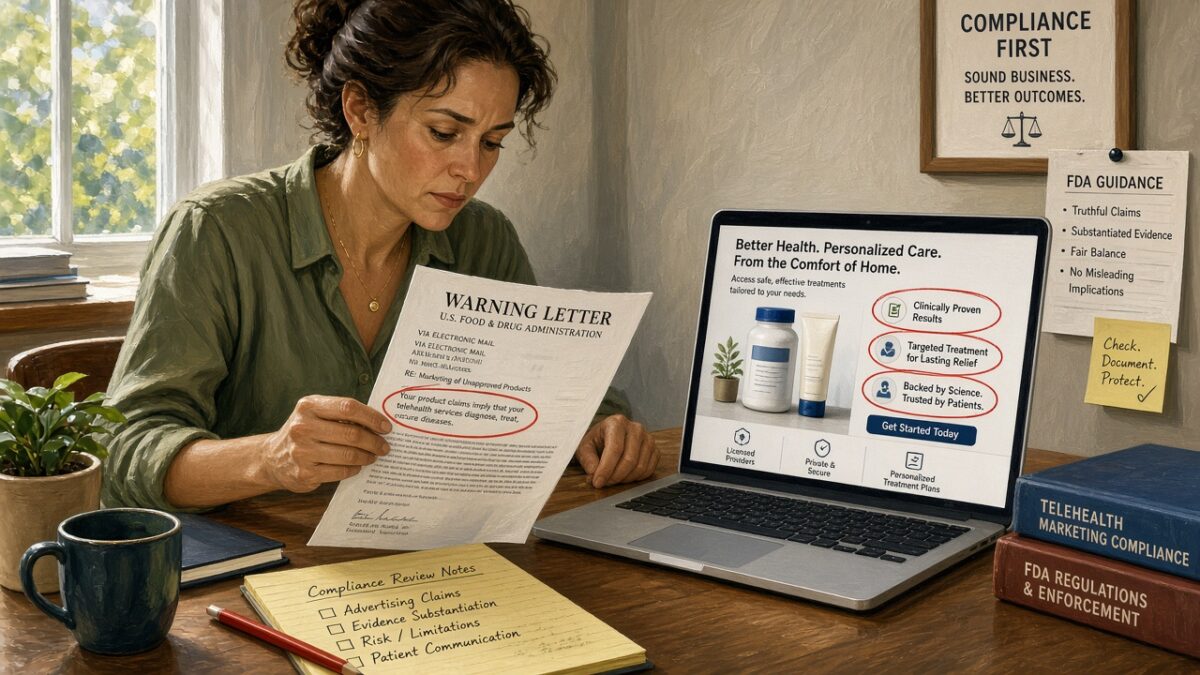
The U.S. Food and Drug Administration on March 3, 2026 announced that it issued 30 warning letters to telehealth companies for making false or misleading claims about compounded GLP-1 products offered on their websites. The agency said the primary violations included claims that implied sameness with FDA-approved products and ads that obscured product sourcing by branding drugs with the telehealth firm's name or trademark without qualification, implying the firm itself was the compounder.
The action sits inside a wider advertising crackdown that FDA says began in September, and it lands directly on website owners, developers, and payment operators who market, fulfill, or process card volume for telehealth and online pharmacy catalogs. Marketing copy is no longer a soft compliance side task. It is a regulatory and acquiring-risk exposure when the product is compounded, not FDA-approved, and sold through a direct-to-consumer site.
What FDA announced
In a March 3, 2026 press announcement, FDA stated that the 30 letters targeted false or misleading claims regarding compounded GLP-1 products on company websites. FDA Commissioner Marty Makary, M.D., M.P.H., said the agency is paying close attention to misleading claims by telehealth and pharma companies across media platforms and taking swift action. He also said compounded drugs can matter for shortages or unique patient needs, but compounders should not try to compound drugs in a way that circumvents FDA's approval process.
FDA described this batch as the second group of warning letters sent to telehealth firms since the agency launched a crackdown on misleading direct-to-consumer pharmaceutical advertisements in September. Over the past six months, FDA said, it has sent thousands of letters warning pharmaceutical and telehealth firms to remove misleading ads, more than it had sent over the entire preceding decade. That volume claim is FDA's own characterization in the March 3 announcement. This report does not invent a precise count beyond that wording.
Reuters reporting on the same day corroborated the letter count, the false-or-misleading-claims framing, and the agency's focus on sameness implications and private-label branding that made firms look like manufacturers. Where Reuters and FDA diverge on detail, this article follows the FDA announcement.
Which claims FDA flagged
FDA named two primary violation themes in the March 3 letters:
- Claims implying sameness with FDA-approved products.
- Obscuring product sourcing by advertising drug products branded with the telehealth firm's name or trademark without qualification, implying the telehealth firm is the compounder.
Those themes matter for storefront operators because they map to common conversion copy. Sameness language often appears as "same as," "equivalent to," or parallel branding against an approved reference product. Private-label branding without clear compounder disclosure can make a telehealth DBA look like the manufacturing source when the product is compounded elsewhere. FDA's announcement treats both patterns as false or misleading in this enforcement round.
FDA also restated a core product-status point operators still get wrong in FAQ and checkout copy. Compounded drugs are not FDA-approved. The agency does not review their safety, effectiveness, or quality before they are marketed. Compounded drugs are also not the same as generic drugs, which are FDA-approved. Any homepage, PDP, email, or paid ad that blurs those distinctions is now easier for regulators, plaintiffs' counsel, and payment underwriters to treat as a documented risk signal.
The March 3 announcement does not publish the recipient list for the 30 letters, does not name specific active ingredients for this batch, and does not quote response deadlines in the press text. This report therefore does not invent recipient names, molecule lists, or cure periods for this set of letters.
Why telehealth ecommerce and payments teams are affected
Website owners and developers selling regulated or high-risk catalogs already face tighter acquiring scrutiny than mainstream retail. Telehealth memberships, compounded weight-loss offers, and online pharmacy flows often sit on specialty merchant category codes, higher reserves, and faster MID reviews after disputes or regulatory headlines. An FDA warning letter about website claims can trigger more than a copy rewrite. It can force a pause on paid acquisition, a legal hold on creative, and a conversation with the acquirer or payment facilitator about product descriptors, fulfillment partners, and chargeback narratives.
For engineering and growth stacks, the practical blast radius is the claim surface area that ships with the storefront:
- Product and landing pages that compare compounded offerings to FDA-approved brands without clear non-approval language
- Telehealth DBA branding on vials, cartons, or PDP titles that omit the compounding pharmacy identity
- Checkout, FAQ, and SMS scripts that treat compounded products as generics or as FDA-reviewed
- Affiliate, influencer, and retargeting creatives that recycle the same sameness language off-site
Ops teams that treat advertising as a separate agency lane from pharmacy sourcing and payment underwriting are the ones most likely to miss the second violation theme FDA called out. Sourcing disclosure is a website and fulfillment labeling problem as much as a pharmacy contracting problem.
The September crackdown context also matters for continuity. FDA's September announcement on deceptive drug advertising framed a broader push against misleading pharmaceutical ads and a surge in enforcement letters. The March 3 telehealth GLP-1 batch is FDA's own second telehealth warning-letter group inside that timeline. Operators who already rewrote copy after September should not assume the prior cleanup covers private-label branding and sameness implications FDA is still citing.
What remains unknown
FDA's March 3 press announcement does not list the 30 companies, does not attach the individual warning letters in that page, and does not spell out follow-on enforcement steps for non-response in the announcement text. Reuters corroborates the core enforcement story but is not a substitute for the letters themselves. Readers who need recipient-level facts should watch FDA's warning-letter database as letters post, rather than rely on secondary roundups that name firms without linking the underlying letter.
This report does not invent letter counts beyond FDA's stated 30, does not name recipients for this batch, and does not attribute manufacturing or adverse-event claims from unrelated secondary coverage to the March 3 announcement. It also does not provide legal advice. Counsel and compliance teams should review live website claims, compounding-pharmacy contracts, and labeling against the Federal Food, Drug, and Cosmetic Act standards FDA is enforcing.
For high-risk ecommerce operators, the news is concrete. FDA is treating compounded GLP-1 website marketing as an active enforcement priority, with sameness claims and obscured compounder identity as the headline violations, and telehealth storefronts are squarely in scope.