
By E-commerce 4 Internet Marketers Editorial
Listicle. Friendly fraud (also called first-party misuse) is when a cardholder disputes a purchase they or an authorized household user actually made. Visa's March 2023 Compelling Evidence merchant FAQ describes first-party misuse as cardholders reporting fraud on authorized transactions, and it outlines Order Insight plus historical transaction matching as ways merchants can stop or overturn certain card-not-present fraud disputes when stated criteria are met. Mastercard's Ethoca Consumer Clarity coverage frames many of the same losses as transaction confusion, where an unrecognized descriptor or missing receipt triggers a bank call that becomes a chargeback. High-risk catalogs (supplements, hemp-derived goods, nicotine, adult offers, and other elevated dispute verticals) feel this earlier because billing descriptors, fulfillment lag, and subscription renewals already confuse buyers.
This listicle covers seven customer-support and helpdesk practices that processors and card networks repeatedly recommend for preventing disputes before representment. It is operational guidance for website owners and developers, not legal advice, and it does not invent dispute-win percentages or unpublished network rule numbers.
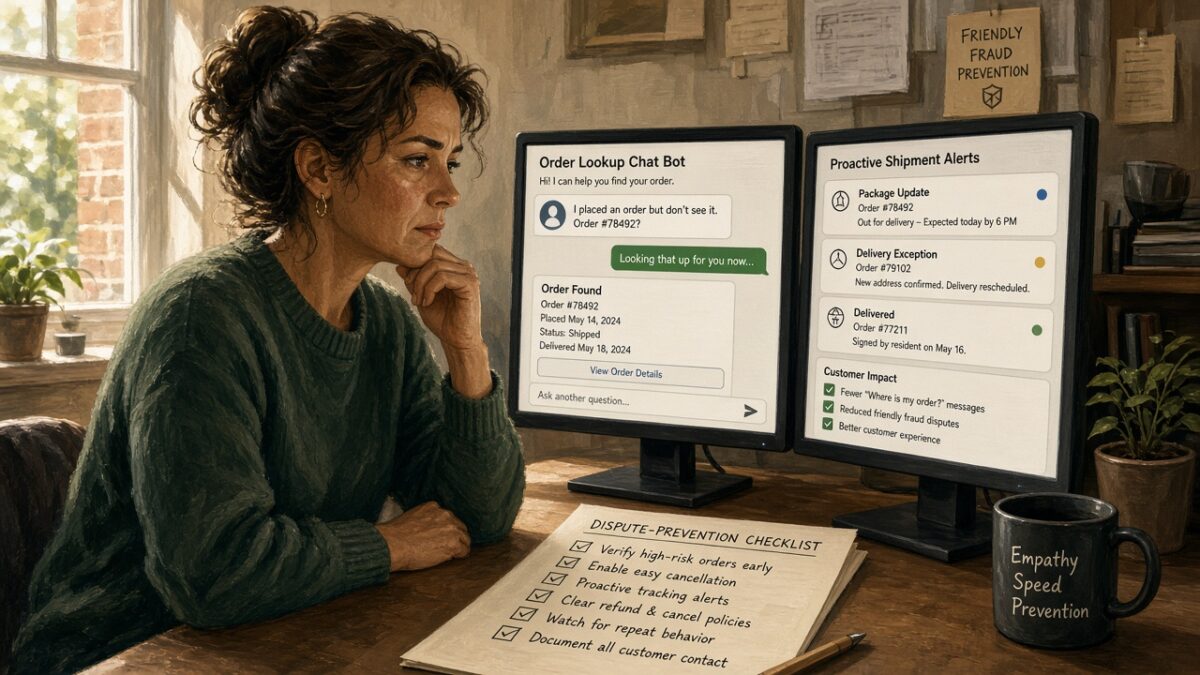
1. Put a self-service order-lookup bot (or status page) in front of the issuer call
When a buyer does not recognize a charge, the fastest safe answer is order detail, not a hold for a human. Stripe's dispute-prevention docs describe Verifi Order Insight lookups that can return product descriptions, quantity, shipping address, IP address, tracking, and merchant contact data to an issuer agent or banking app so the cardholder can recognize the purchase before a dispute is filed.
Compelling Evidence 3.0 can go further when prior-transaction data qualifies. Stripe's Order Insight documentation states that if at least two prior transactions exist with complete product descriptions, matching IP addresses, and at least one matching email address or customer delivery address, the issuer must block the dispute so it is never filed and does not incur dispute fees or a dispute-rate increase. Visa's merchant FAQ for the Compelling Evidence update separately lists mandatory matching themes for post-dispute responses, including item description plus matching account or login ID, delivery address, device ID or fingerprint, and IP address signals across two prior undisputed transactions in a defined lookback window. Treat Stripe's Order Insight block path and Visa's post-dispute evidence path as related but not identical checklists.
Helpdesk implication for high-risk shops:
- Expose a bot or authenticated status page that answers "Where is my order?" with order number, SKU, ship date, carrier, and tracking without forcing a ticket.
- Persist the same fields your processor needs for Order Insight or equivalent issuer lookups (product description, email, IP, shipping address, tracking number, customer-service phone).
- Keep the bot's answers identical to what finance would submit as dispute evidence later. Inconsistent timelines between chat macros and fulfillment logs create weak representment files.
Do not promise a fixed deflection rate. Stripe ties success to data quality at charge time, not to a universal percentage.
2. Ship clear cancel links, not maze-like retention flows
Subscription and continuity friction is a classic path into cancelled-recurring and "I did not authorize this renewal" disputes. The Federal Trade Commission's October 16, 2024 business guidance on the amended Negative Option Rule (often called "Click to Cancel") states that cancellation must be as easy as enrollment, offered through the same medium used to sign up, and not overly burdensome. FTC guardrails include not requiring a live or virtual agent to cancel if signup did not require one, and answering phone cancel requests during normal business hours without extra fees when phone cancel is offered.
Practical helpdesk build:
- Place a one- or two-click cancel control in the customer account and in renewal emails.
- Log cancel requests with timestamps, channel, and confirmation IDs. Stripe's dispute evidence fields explicitly include cancellation policy disclosure and cancellation rebuttal materials for subscription disputes.
- For regulated continuity offers, treat cancel latency as a compliance and chargeback control, not only a retention KPI.
Confirm current Negative Option Rule applicability and effective dates with counsel for each offer and channel. The operational point stands either way. Hard-to-cancel flows push buyers to the issuer.
3. Push proactive shipment tracking before the "item not received" clock starts
"Product not received" and related non-delivery disputes are among the most preventable when carriers provide tracking. Stripe's prevention checklist tells merchants to use carriers with online tracking and delivery confirmation, and to give customers tracking as soon as it exists. Shopify's Preventing chargebacks and inquiries help article likewise tells merchants to keep customers updated through shipping, to use online tracking and delivery confirmation when possible, and to tell customers when shipping is delayed.
Tie tracking to helpdesk automation:
- Auto-send ship confirmation with carrier and tracking URL.
- Trigger a second message on out-for-delivery and on delivered events.
- Open a proactive ticket (or bot nudge) when a parcel is stuck beyond your SLA, with a clear refund or reship offer.
Separately, the FTC's Mail, Internet, or Telephone Order Merchandise Rule business guide requires sellers to have a reasonable basis for promised ship times (or 30 days if none is stated), to notify buyers of delays with a cancel-and-refund option, and to make prompt refunds when orders are cancelled under the Rule. Delay notices that include an easy cancel path are both a Rule compliance habit and a chargeback brake. FTC consumer advice on non-delivery likewise tells buyers to contact the seller first, then dispute with the card issuer if the seller will not refund. Merchants who answer first keep more of those conversations out of the bank queue.
4. Make support discoverable on the storefront and on the statement
Unrecognized charges often start as "Who is this merchant?" Stripe tells merchants to make customer-service contact information easy to find, to use a recognizable statement descriptor (commonly the website domain or business name, within descriptor length limits), and to respond and refund quickly so buyers do not bother disputing. Shopify's prevention guidance tells merchants to make contact information easy to find and to respond quickly when customers report problems.
Mastercard's March 20, 2024 newsroom piece on Ethoca Consumer Clarity describes transaction confusion as a driver of friendly fraud, citing a January 2024 Datos Insight survey in which 50 percent of consumers questioned a purchase in the prior 12 months and 24 percent did so because they did not recognize statement details. Consumer Clarity is described as surfacing clear merchant names, logos, and itemized receipts inside banking apps so cardholders recognize legitimate charges.
Helpdesk checklist:
- Footer, order emails, packing slips, and SMS should share the same support email and phone that appear in issuer enrichment feeds.
- Align the soft descriptor with the brand the buyer saw at checkout. Stripe warns that unclear descriptors are a preventable dispute cause.
- Train agents to ask for the last four of the card and the approximate charge date first, then pull the order, rather than debating "fraud" on the first sentence.
5. Prefer fast merchant refunds and replacements over waiting for the bank
Stripe's prevention guidance is blunt. Clear contact plus quick refunds or replacements make customers far less likely to take the time to dispute. Shopify's prevention matrix for "credit not processed" tells merchants to publish a clear, easy-to-find return policy and to refund as soon as possible. FTC consumer materials on billing errors under the Fair Credit Billing Act explain that cardholders can dispute charges for goods not accepted or not delivered as agreed within stated timelines. If the merchant already fixed the problem with a refund, there is nothing left to fight about at the issuer.
Operational rules for high-risk desks:
- Publish decision trees for refund versus reship versus partial credit, with dollar and SKU limits agents can approve without escalation.
- Prefer full refunds when fraud is certain and goods have not shipped. Stripe notes that customers cannot dispute fully refunded payments, while they can still dispute partially refunded payments, and that card network rules can allow a dispute for the full original amount after a partial refund.
- Never tell a frustrated buyer "talk to your bank" as the first answer. That sentence manufactures chargebacks.
6. Capture Compelling Evidence-ready identity crumbs in every ticket and checkout
Visa Compelling Evidence 3.0, as summarized in Visa's March 2023 merchant FAQ and in Stripe's Compelling Evidence documentation, focuses on proving a historical relationship with the same cardholder for certain card-not-present fraud disputes (Visa condition 10.4 in those materials). Visa's FAQ lists mandatory themes that include item description plus at least two matching signals among customer account or login ID, delivery address, device ID or fingerprint, and IP address, with one of those matches required to be device ID, device fingerprint, or IP address, across two prior transactions with no fraud activity in a 120 to 365 day lookback from the dispute processing date (with a stated AFT exception). Stripe states it can pre-populate qualifying prior transactions when payments ran on Stripe and the integration collected IP, email, shipping address, and product descriptions.
Support tooling should not throw that data away:
- Store IP, device, login ID, and shipping address on the order object and on related tickets.
- Prefer helpdesk macros that attach tracking screenshots and delivery confirmation images. Stripe notes card issuers do not follow bare tracking links in evidence packages, so screenshots matter.
- Keep customer email threads exportable. Stripe and Shopify both treat customer communications as core dispute evidence.
Omit invented win rates. Stripe and Visa describe eligibility and process. They do not authorize a secondary "X percent win" claim without a primary cite.
7. Script the helpdesk for issuer alerts and pre-dispute windows
Stripe documents integrations with Verifi Rapid Dispute Resolution (RDR) and Ethoca Alerts that can auto-refund matched alerts under merchant-defined rules so some cases never become scored chargebacks. Those products are not a substitute for a staffed desk. They are a second line when the cardholder already contacted the bank.
Wire alerts into support:
- Route Ethoca or Verifi alerts into the same queue as "Where is my order?" tickets, with SLA minutes, not hours.
- Auto-attach order, tracking, and prior refund status so an agent can refund, stop fulfillment, or escalate with evidence immediately.
- Record every alert outcome. Acquirers and monitoring programs care about dispute rates. Clean alert handling is how high-risk merchants show control.
What this stack does not replace
None of these tools excuse weak product claims, delayed fulfillment without notice, or dark-pattern renewals. FTC Mail Order Rule duties, Negative Option disclosure and cancel duties, and card-network monitoring programs still apply. Representment remains necessary when a dispute is filed. Prevention only reduces how often the desk has to fight.
For high-risk operators, the winning pattern is boring. Make the charge recognizable, make the order findable, make cancel and refund easy, prove shipment, and keep the identity crumbs Compelling Evidence and Order Insight need. That is customer support as chargeback infrastructure.
Sources
- Stripe, Best practices for preventing fraud
- Stripe, How dispute prevention works (Order Insight, RDR, Ethoca Alerts, Compelling Evidence 3.0)
- Stripe, Dispute evidence best practices (Visa Compelling Evidence 3.0 support)
- Visa, Evolution of Compelling Evidence Merchant FAQs (March 2023)
- Shopify Help Center, Preventing chargebacks and inquiries
- FTC, Business Guide to the Mail, Internet, or Telephone Order Merchandise Rule
- FTC, Click to Cancel business guidance (Oct. 16, 2024)
- FTC Consumer Advice, Using Credit Cards and Disputing Charges
- FTC Consumer Advice, What To Do if You're Billed for Things You Never Got
- Mastercard Newsroom, Consumer Clarity / transaction confusion (March 20, 2024)